Monday, 14 August 2017

Mercedes-Benz AMG GT 2017

The Mercedes-Benz AMG GT—shortened to Mercedes-AMG GT by the automaker—is a two-door, high-performance luxury coupe that succeeded the SLS AMG as the automaker's halo car.
However, Mercedes doesn't consider it a direct successor. Though the GT uses some of the SLS's structure, it is shorter overall, drops that model's gullwing doors, and costs a good deal less. 
The AMG GT is the second car built by the AMG brand completely on its own without a Mercedes-Benz production car as its basis and it's gunning straight at the Porsche 911.
 Image result for Mercedes-Benz AMG GT
The first AMG GT models arrived in 2015 for the 2016 model year. With similar proportions to the SLS, the AMG GT comes off as prettier, and one of the most attractive Mercedes designs in a long time. The interior adopts an aviation-influenced concept, with just enough buttons on the center console to control all of the car's mechanical systems—no need to dig through pages of menus, which is much appreciated in the heat of the moment.
Under its hood, the AMG GT offers a twin-turbocharged 4.0-liter V-8 engine in two states of tune, one for each of a pair of variants of the car: the AMG GT and AMG GT S. The GT is the entry point to the range, offering 456 horsepower and 443 pound-feet of torque. The car can dash from 0 to 60 mph in 3.9 seconds and hit an electronically limited top speed of 189 mph. The more potent GT S is rated at 503 hp and 479 lb-ft, reducing the 0-to-60-mph dash to 3.7 seconds and with an electronically limited top speed of 193 mph. Both versions of the car use the same 7-speed dual-clutch gearbox, which itself is carried over from the SLS AMG. The GT S was offered in the first year of production, including a special Launch series, with the GT added for subsequent model years.
Image result for Mercedes-Benz AMG GT rear
The AMG GT offers a unique engine configuration—one it claims to be a world first in a sports car: the combination of dry-sump lubrication with a “hot vee” turbocharger layout. The dry-sump lubrication system means the AMG GT dispenses with the bulky oil pan below the engine, instead relying on a remote reservoir and pump, allowing for lower mounting and a correspondingly lower center of gravity for the car. The “hot vee” layout means the AMG GT’s intake and exhaust manifolds flow in the reverse direction of a typical engine, allowing for the turbochargers to be placed in the engine's valley, which creates a more compact and thermodynamically efficient package of the whole unit.
Built of aluminum, the AMG GT promises to be especially light; the space frame itself weighs just 509 pounds. AMG was able to shed mass compared to the SLS by using conventional doors instead of the gullwings of the prior model, which required extra strengthening. This also allowed the designers to pen a curved roof rather than the flat top needed for the gullwings to work. The shorter overall length also contributed to the weight reduction.
Image result for mercedes benz amg gt interior
In addition to the high-performance hardware, the AMG GT offers some interesting performance-enhancing electronics. The drive-select system offers C, S, and S+ modes for progressively sportier responses, affecting the shift characteristics, throttle response, and dynamic adaptive dampers; the GT S model offers an additional RACE mode to better suit track use. An available set of active powertrain mounts stiffens the connection between engine and transaxle and body when necessary to help transfer loads at just the right time, and can do so independently at each point for properly timed reactions to body movements. The AMG GT can also factor in lateral acceleration load (cornering force) to help adjust the amount of power sent to the rear wheels when the driver applies the throttle. This system is meant to improve both cornering stability and corner-exit traction.
Image result for mercedes benz amg gt engine
For the 2017 model year, the AMG GT lineup grew to include a base model—and in 2018, it'll gain two more. For 2017, the lineup includes the AMG GT S and base GT. Both have the same 4.0-liter twin-turbo V-8, but the base GT makes 456 hp (versus 503) and 443 lb-ft of torque (versus 479). A 7-speed dual-clutch AMG SpeedShift gearbox also comes standard, but the base GT does without the GT S model's AMG Adaptive suspension, AMG Adaptive exhaust, and "Race" mode for its Dynamic Select system.

For 2018, the AMG GT lineup grew to include a GT roadster, a GT C roadster, and the GT R. The Roadsters share most of the specs of the GT and GT S coupes; the GT R gets a litany of changes, from active rear steering to exotic Michelin tires to a high-output version of the twin-turbo V-8.


Chevrolet Bolt EV 2017

The 2017 Chevrolet Bolt EV is the first affordable electric car with a 200-mile range ever sold in the U.S.
Compared to the latest Nissan Leaf—by far the world's best-selling electric car today—the 2017 Chevy Bolt EV offers about twice the range, slightly more passenger volume, and a vastly more modern interior, at about the same price.
All Bolt EVs are assembled in Michigan, although many of the car's powertrain and display components come from GM's development partner LG Chem in South Korea.
Image result for chevrolet bolt ev 2017

While it is built in the same Orion, Michigan assembly plant as the next-generation Chevy Sonic subcompact, the Bolt EV rides on its own dedicated platform, with a wide, flat lithium-ion battery pack under the cabin floor and an electric motor powering the front wheels.
But it's the 238-mile EPA-rated range that's really the Bolt's calling card. That's a capability otherwise available solely in cars with a Tesla badge, at prices of $70,000 and up. It's delivered by a 60-kilowatt-hour battery pack that powers a 150-kilowatt (200-horsepower) motor driving the front wheels. The Bolt's overall weight is about 3,580 pounds, according to the manufacturer. Official charging times haven't yet been announced.
Walking up to the Bolt EV, it appears a bit smaller than the Leaf on the road—perhaps due to its short overhangs—but the car is wide for its length and actually larger in person than it appears from a distance. The nose has a Volt-like "grille" blanking panel, flanked by light units that wrap around and sweep most of the way back to the base of the windshield posts. A larger opening below provides an air intake.
Related image
A body-side crease sweeps up toward the rear, with the bottom of the window line climbing even higher at its back end. The rear has a relatively vertical hatch opening onto a spacious load bay with 16.9 cubic feet of cargo volume.
The Bolt EV's cabin is light and airy, and the remarkably thin front seats give an extra inch of rear legroom compared to regular seats. Four adults can ride comfortably, though the "five-passenger" description is pushing it.
Passenger volume is 94.4 cubic feet, against 92.4 cubic feet for a Nissan Leaf—and only 94 cubic feet for the much larger Tesla Model S. The Bolt's interior is "two segments larger" than the car's exterior size would suggest, said development engineers.
The lack of an engine let Bolt EV designers move the windshield base down and forward, letting them rake the large glass at almost the same angle as its short hood. Frontal vision from the driver's seat is exceptional, which will make the Bolt easy to park.
Image result for chevrolet bolt ev 2017

The seats are comfortable, and all occupants sit upright, and higher than they do in the more rakish Volt. The slim dash and console and the car's flat floor make the front footwells especially wide, and outward visibility is excellent.
The dashboard has both a central 10.2-inch touchscreen built into the top of the console and a fully digital 8-inch instrument cluster behind the steering wheel. The Bolt EV also uses General Motors' new digital rear-view mirror; its rear-facing camera gives a wide 80-degree image in the crisp digital display that replaces the mirror glass, against 22 degrees for a conventional mirror.
There's no spare tire, but neither is there an inflator kit; the electric Bolt will be the first car on the market to use the latest development of Michelin's self-sealing tire technology. A portable 120-Volt charging cord is housed under the load bay, Chevy expects most Bolt EV users to recharge its large battery pack at 240-Volt Level 2 charging stations.
The Bolt accelerates confidently even with four adults in the car. GM quotes acceleration from 0 to 60 mph at less than 7 seconds, and we found we could chirp the inside front tire under full power out of a turn. It corners relatively flat on its 17-inch alloy wheels, and the steering had a nice positive self-centering action. We didn't hear any motor or electronics whine, and the brake feel was consistent enough that the  transitions between regenerative and friction braking was imperceptible.
Image result for chevrolet bolt ev 2017
The standard Drive mode behaves just like a car with a conventional automatic transmission (minus the shifting), complete with idle creep. A paddle behind the left side of the steering wheel lets the driver increase the regenerative braking rate. Low mode, which many drivers will come to prefer, provides so-called "one-pedal driving," including the ability to slow right down to a full stop without touching the brake pedal. It's a smoother, calmer, more relaxing way to drive.
The base price of the Bolt EV is $37,500 before incentives, with higher trim levels and options pushing it above $40,000. The car qualifies for a $7,500 federal income-tax credit, as well as a $2,500 purchase rebate in the state of California.

Chevrolet Tahoe 2017

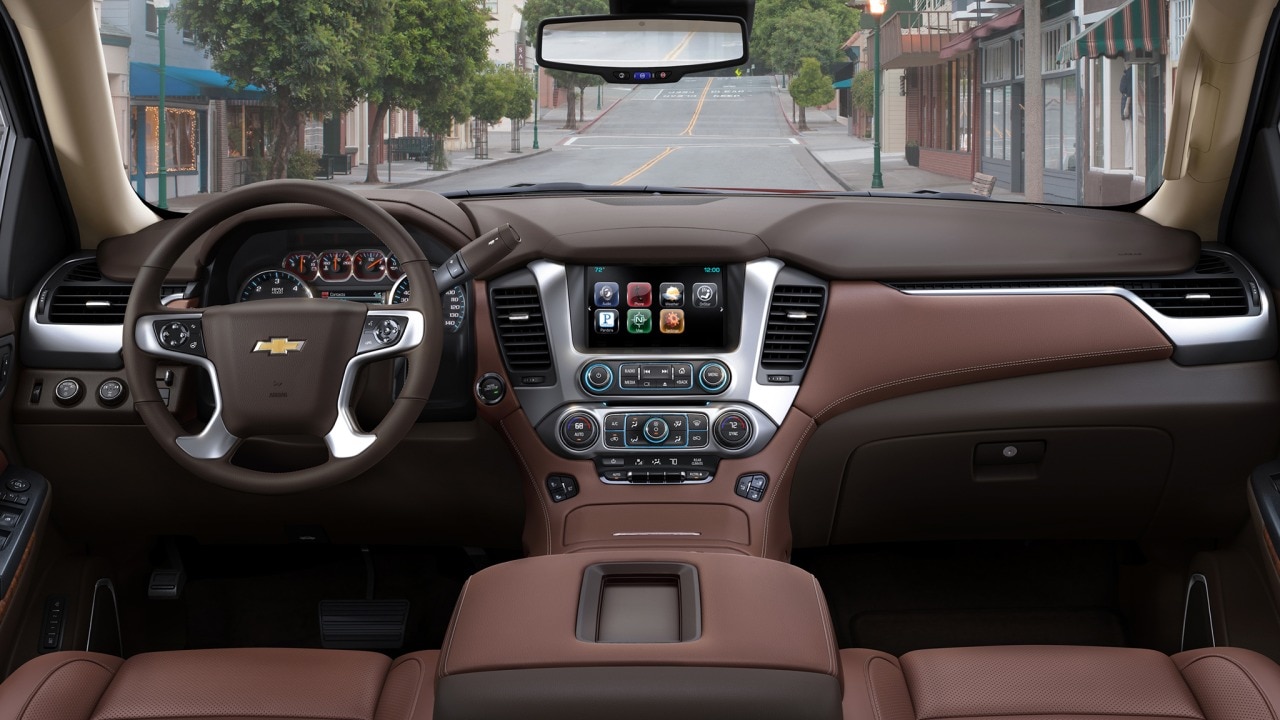
The Chevy Tahoe is a three-row, full-size SUV and the short-wheelbase companion to the Chevy Suburban.
With the Tahoe, Chevrolet has a rival for vehicles like the Ford Expedition, Nissan Armada, and Toyota Sequoia—not to mention GM's own family of Suburban, Yukon and Escalade utility vehicles. 
In its higher trim levels, the Tahoe even can be seen as a competitor for higher-end vehicles like the Mercedes-Benz GLS-Class, since the nicest versions overlap it in price, and can even seem a bit more polished.
Image result for chevrolet tahoe 2017


The new Chevrolet Tahoe
The Tahoe's been a survivor because of its no-nonsense design and its durability. Most recently redesigned for the 2015 model year, today's Tahoe is better focused on its mission of providing seating for eight in comfort, while able to tow up to 8,500 pounds. Nine-passenger seating is also available on base models equipped with an optional front bench seat in place of the standard buckets.
In the 2014 model year, GM introduced the first vehicles on its updated full-size SUV/truck architecture. The 2014 GMC Sierra and 2014 Chevy Silverado trucks adopted a new body structure, more angular looks, and received new powertrains including an updated 5.3-liter V-8 and a totally reworked 4.3-liter V-6.
The Tahoe shared many of those updates when it was new a year later, but it doesn't offer the V-6 engine. The Tahoe continues to offer a single powertrain, GM's new 5.3-liter V-8, which is coupled to a 6-speed automatic transmission. The V-8 is rated at 355 hp and 383 lb-ft of torque. It can be had in both rear- and four-wheel drive. A bigger engine is available in GMC's related Yukon.
Related image
Coupled with the sharp new look and drivetrain are new technology options and improved comfort. The Tahoe's manners on the road are impeccable, especially with the newly optional adaptive shocks, and the cabin is also much quieter than the previous model's, matching nicely with the more comfortable seating and more stylish look. Third-row access is better because the second row of seats now folds flat, and there is a couple more inches of second-row leg room, which helps those in row two get comfortable and also makes climbing to the way-back a little easier. On models with front bucket seats, the Tahoe tops off a revised safety package with GM's new front-center airbags, which help keep front-seat occupants from striking each other during a collision.

Image result for chevrolet tahoe 2017
The Tahoe is one of a number of GM vehicles to offer 4G LTE from AT&T, which includes in-car wi-fi hotspot capability and a faster connection to OnStar. The functionality was added mid-way through the 2015 model year with a hardware update, and allows occupants to connect phones, tablets, and other devices to a super-fast LTE connection that beats the speed of mobile devices and also avoids using the data in your cellular plan.
New features added through the 2016 model year include a touchscreen infotainment system, lane-keeping assist, and Apple CarPlay. Changes for 2017 were minor—mostly trim and features repackaging—save for the addition of automatic emergency braking, a teen-driver alert system, and a rear-seat DVD entertainment system.

Chevy Tahoe history
The Tahoe arrived in the 1995 model year, replacing the Blazer badge and was teamed with a four-door model. Based on the big GM trucks, the Tahoe was powered in most cases by a big 5.7-liter V-8. A turbodiesel version found few applications and few buyers. In this generation, sold until the 1998 model year, GM added a driver-side airbag and a luxury-trim Limited package, which was sold in the 2000 model year. This version overlapped with the entirely new "GMT800" Chevy Tahoe, which was new for the 2000 model year.
The 2000-2006 Chevy Tahoe again offered a choice of V-8 engines, either a 4.8-liter V-8 or a 5.3-liter V-8, separated only by 10 hp. A 4-speed automatic took care of shifting in all versions, and the Tahoe came in rear- or four-wheel-drive versions. A more genteel look wasn't quite matched by a lackluster interior, but with good towing capacity and additions like stability control and more airbags, the Tahoe rode the SUV wave of popularity to become a best seller in the Chevy truck lineup.

Image result for chevrolet tahoe 2017
GM advanced its plans to replace the GMT800 trucks and SUVs with a GMT900 family of vehicles—and the 2007 Chevrolet Tahoe proved the move worthy in mechanical terms, even if SUV sales were about to fall off a proverbial cliff. The new Tahoe's crisp lines, and improved body rigidity lent it a mature, even sophisticated look—one matched by a handsome interior. All the towing and hauling capability carried over, with a more comfortable five- or six-seat interior package—but the powertrains got a fuel-economy boost that was offset on the marketing side by the addition of a 403-hp, 6.2-liter V-8.
Chevy introduced a Tahoe Hybrid in the 2009 model year. It used a 6.0-liter V-8 making 332 hp backed by a two-mode transmission that was engineered with cooperation among General Motors, Daimler, and Chrysler. Fuel economy ratings were as high as 20 mpg in the city and 23 highway. The large battery pack was located below the second row of seats, which compromised space and interior flexibility, while towing was also down, to a max of 5,000 pounds.
Through 2013, changes were minimal to the Tahoe lineup. Trailer Sway Control was added for 2012, and Powertrain Grade Braking was a new addition for 2013; both enhance towing stability and safety. The Tahoe Hybrid was dropped after the 2013 model year.


Honda CR-V 2017

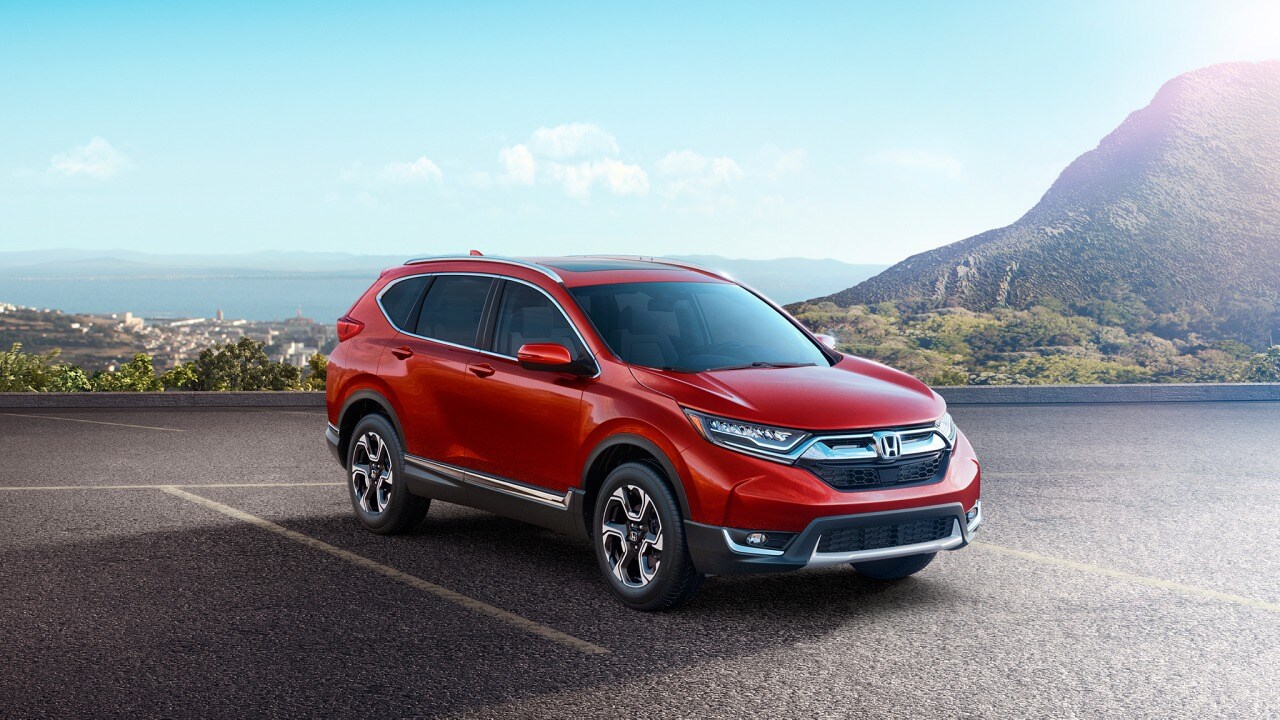
For 2017, the CR-V is all-new, but its recipe hasn't changed a bit. It remains a compact crossover with surprisingly good room for five. Base LX models essentially carry over the previous generation's 2.4-liter 4-cylinder, but all other trim grades (which Honda says should represent about 75 percent of the model's sales) utilize a turbocharged 1.5-liter 4-cylinder plucked from the Civic range. In the CR-V, it's rated at 190 horsepower and 179 pound-feet of torque, meaning it is slightly peppier than the engines that power base versions of most rival motors. 

Image result for honda crv 2017
Both engines are mated exclusively to continuously variable transmissions (CVT) and they offer a choice between front- and all-wheel drive. The turbo motor shaves about a second and a half from the non-turbo's 0-60 mph sprint, but it feels much peppier in practice. 
Although the engine bay represents one of the CR-V's biggest changes, its expanded interior capacity shouldn't be forgotten. Honda only stretched the new model a little overall, but it feels much roomier inside. Of particular note is its cargo area, which now stretches a full 5 feet long with the second row folded. Likewise, the model's dashboard is more conveniently-arrayed than before. We're especially happy that all models once again boast a volume knob instead of a silly and difficult-to-use slider knob. 
On the safety front, all but the base CR-V LX include the brand's Honda Sensing collision avoidance tech—adaptive cruise control, automatic emergency braking, and lane departure warning. 
Honda CR-V history
During its prior generations, the CR-V evolved from a softer—but still very basic—alternative to truckier vehicles like the Suzuki Sidekick and Jeep Wrangler into more of a family-oriented people-mover. It has seen great success with that transition, helping to kick-start the small crossover segment that continues to grow.
The first CR-V (1997–2001) was like other early crossovers; a more plain-looking vehicle that bore a strong resemblance to the old Honda Wagovan. It was equipped with a 4-cylinder engine then, like it has now. The CR-V quickly earned a following for its great visibility and durability, if not necessarily for its visual appeal.

Image result for honda crv 2017
The second-generation CR-V, sold from 2002, was a significant improvement in nearly every way—much more refined, responsive, and comfortable. These models all have a 2.4-liter 4-cylinder engine, making about 160 hp, with most of them hooked up to a 4- or 5-speed automatic transmission (a 5-speed manual was also offered).
Safety has generally been a selling point for the CR-V. In a mid-cycle refresh for 2005, Honda increased the CR-V's safety content, making side airbags and anti-lock brakes standard across the line, which improved that model's IIHS side-impact results from a mediocre "Marginal" to the top "Good" result. The CR-V's scores in federal government crash tests have been generally good.
For 2007, Honda completely redesigned the CR-V again, with that generation quite a bit more passenger-focused than the previous generation. That redesign gave it an interior feel that was more like that of a tall wagon or—gasp—a minivan. One odd attribute of the first- and second-generation CR-V models is the externally mounted spare wheel and tire; for the 2007 redesign, Honda finally relocated the spare from its perch on the hatch. In the same generation, the interior design became more advanced and well-appointed.
The changes made to create the fourth-generation CR-V for the 2012 model year were more evolutionary than with previous generations, at least on the outside. Inside it feels a bit different, with upgraded materials and trims, along with an instrument panel that's in line with the latest Odyssey van's, and an even better rear-seat mechanism that allows you to fold the seats neatly forward with one hand—without the need for power systems.
Image result for honda crv 2017
The engine was carried over initially, but the 5-speed automatic offered in 2012–2014 models received taller ratios, helping the model achieve better gas-mileage ratings, according to the EPA. Overall, the driving experience is nothing to get excited about, and while the CR-V rides well and is reasonably responsive, the new electric power steering system here fails to give the crisp, confident-handling feel the model had in the last generation.
Honda has updated the CR-V's connectivity in the most-current generation. Bluetooth hands-free connectivity and Bluetooth streaming audio are at least standard across the entire model line, Pandora streaming is integrated with the system (if you have the right smartphone), and a new multi-information display can show personal pictures as well as the feed from a new rearview camera system.
Image result for honda crv 2017
The CR-V received an extensive upgrade for 2015. Styling was tweaked, and there was a new 4-cylinder engine mated to a CVT borrowed from the Accord that replaced the 5-speed automatic. The result was improved fuel economy and slightly better acceleration. The front end featured a much more modern, upscale look, while the rest of the exterior received some other small touches. Honda also gave the interior a once-over, improving materials and modifying the layout slightly. 


Wednesday, 10 May 2017

Suzuki Ciaz 2017

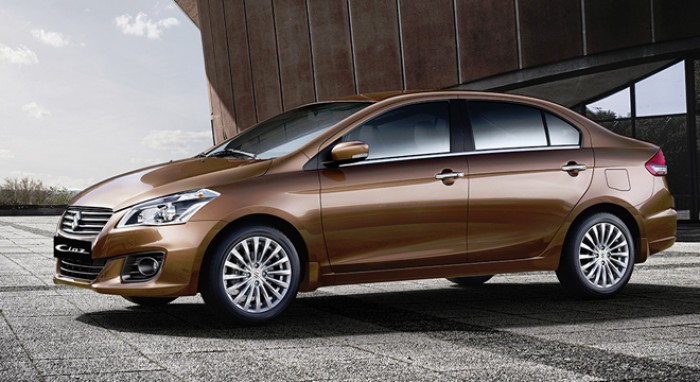
After the successful launch of Vitara, Suzuki has unveiled yet another powerful and fuel efficient imported car in the local auto market, this time an ultra-modern Sedan, Suzuki Ciaz.

 Related image

Renowned actor and Suzuki’s new brand ambassador for Ciaz, Mr Shehryar Munawar lifted the wraps off the car in Lahore on Wednesday, which is being directly imported from Thailand with a 1.4 litre powerful, fuel efficient K- Series engine. MD of Pak Suzuki Mr Hirofumi Nagao and GM Marketing Pak Suzuki Mr Azam Mirza were also present at the event.

Suzuki Ciaz will be available in both Automatic and Manual transmission and includes a 3 year warranty that can be availed from over 90 dealerships nationwide.

Suzuki Ciaz Features

Noteworthy features of the luxury Sedan are keyless entry, ABS brakes with EBD, SRS airbags and an innovative interior.

Suzuki Ciaz Price in Pakistan

The Manual Transmission variant of Ciaz is priced at PKR 1,699,000 while the Automatic Transmission variant comes with a price tag of PKR 1,839,000.

Stylish and Spacious Design

At a glance, Suzuki Ciaz features a sleek exterior profile that is designed to enhance aerodynamic efficiency. The spacious interiors provide ample front and rear leg room. The storage areas are also designed to maximise practicality and include front and rear cup and bottle holders, centre arm rest storage area, seats’ rear pockets, and centre lower box storage compartment.


 Image result for suzuki ciaz

The boot of the car features 490 litres of storage capacity, which is more than many local sedans. The price range and engine size put it in the bracket of Honda City and Toyota Corolla XLi, GLi models.

Ciaz Exterior

While the perception of a car’s design is subjective, exterior characteristics of Suzuki Ciaz visually stand out.

Related image


One feature that sets Ciaz apart from its competition in Pakistan is the presence of projector headlamps, something often ignored by the automakers in our country. For instance, you would need to deal with the reflector halogen headlights from the twentieth century even if you climb the configuration ladder of a Toyota Corolla and get yourself an Altis Grande for PKR 2.39 million.
Same goes true for Ciaz’s other competitor, Honda City, which like Corolla does not give customers the liberty to upgrade to projector headlamps at the moment.

Ciaz Interior

The interior of Ciaz is probably one of the most understated elements of the car, an area which is usually the Achilles heel for almost every entry-level sedan.
Ciaz makes up for the visual sparsity with the help of a hundred millimeter longer wheelbase, giving it a noticeably roomier cabin than the one in Honda City. Moreover, power windows, central locking and keyless entry come standard on Ciaz, all of which are otherwise absent from Toyota Corolla’s base-level ‘XLI’ trim.

Powerful yet Lightweight

The Ciaz comes equipped with a 1.4 litre engine with VVT & delivering 91 bhp. With its extremely light weight construction, the car weighs only 975 kilograms which means that it can deliver a staggering power to weight ratio of 93 bhp/tonne.

In spite of having a larger footprint, a lighter chassis enables Ciaz to tip the scales at 1010 kilograms, making it nearly a hundred kilograms lighter than Honda City and over one hundred and fifty kilograms lighter than the Toyota Corolla.

Related image

Security Features

As far as safety parameters are concerned, the Ciaz comes equipped with dual frontal airbags, ABS with ED and seat belts with ELR, pre-tensioners and force limiters. This gives Ciaz a 4 star ASEAN NCAP safety ratings for adult occupants.


Pak Suzuki’s prolific track record for introducing reliable vehicles with exclusive warranty continues to bring quality for the Pakistani consumers and promises to value its commitment and harness the power of Suzuki’s “Way of Life!” Courtesy, Dawn

Ford Fusion 2017

The Ford Fusion mid-size sedan is one of the best-selling family four-doors on the market.

Image result for ford fusion 2017 black

Rivals include perennials like the Honda Accord and Toyota Camry, but the Fusion also competes with the Chevrolet Malibu, Mazda 6, Nissan Altima, Hyundai Sonata, Kia Optima, and Subaru Legacy.

With the Fusion, Ford offers more powertrain choices than many of those competitors, including a plug-in hybrid sedan. (The Fusion Hybrid, and its plug-in hybrid Energi variant, are covered separately.)

For 2017, a new Ford Fusion Sport joins the lineup with a 325-hp twin-turbo V-6 under the hood.


The new Ford Fusion


The Fusion was entirely redesigned for 2013 in stunning fashion. The Fusion was named The Car Connection's Best Car To Buy 2013, for its sleek, elegant good looks; refined performance; and fuel-efficient EcoBoost turbo powertrains. The Fusion has a premium-car feel and an impressive feature set.


The latest Fusion wears an entirely new design language that owes much to the themes seen on the Ford Focus. It's a sophisticated look, with some cues that echo details on everything from newer Hyundais to the latest Aston Martins and Audis. The cockpit design is formatted around MyFord Touch, a touchscreen controller for phone, navigation, climate and audio systems—though it's an option, not standard.

MORE: Read our 2017 Ford Fusion review

Engines on the 2013 Fusion included a base 2.5-liter 4-cylinder engine with 175 horsepower; a turbocharged 1.6-liter 4-cylinder with direct injection, 178 hp, and an estimated highway gas mileage rating of 37 mpg; and a 2.0-liter turbo-4 shared with vehicles from the Taurus sedan, Edge crossover, and the hot Focus ST hatchback. Most were fitted with a 6-speed automatic, although a 6-speed manual was initially available in 1.6-liter versions. That engine was discontinued after 2015.

Image result for ford fusion 2017 black

While most Fusions make do with front-wheel drive, the top Titanium trim offers the option of all-wheel drive when paired with the 2.0-liter EcoBoost engine. The 2.0-liter almost needs the extra traction to put its potent power down. All Fusions use an independent suspension design that provides confident, and even sporty, handling. It's fun to hustle and also handles long cruises with comfort. The Fusion also has good interior packaging for a family sedan, with a good balance of front- and rear-seat room.

When this generation was introduced, it offered a strong list of standard and available features. Those include Bluetooth with audio streaming standard, available leather upholstery, a rearview camera, and even park assist, which uses sensors and the electric power steering to put the car in tight spots with the driver only operating the brake and throttle.


In the 2014 Fusion, Ford introduced a new 1.5-liter 4-cylinder EcoBoost engine that returned almost the same performance as the 1.6-liter turbo-4 but with better fuel economy. It comes paired only to the 6-speed automatic and features an engine stop-start system to conserve fuel. The 2014 Fusion also made the inflatable rear seatbelt system that was originally offered in the Explorer available on the Fusion, and Ford added cooled front seats and a heated steering wheel to the sedan's options list as well.

For the 2015 model year, Ford quietly dropped the manual transmission and its requisite 1.6-liter turbo-4 from the Fusion lineup. The Fusion's other features remained: enduring styling, very good handling, and excellent crash-test scores from both the IIHS and the NHTSA.

Related image

For 2017, the Fusion received a very mild mid-cycle update, with a grille and headlights so subtly redesigned that you might miss them altogether. There's a new top-level Platinum trim, and a new powertrain option as well: the Fusion Sport offers this generation's first V-6, a 325-horsepower 2.7-liter turbocharged V-6, along with all-wheel drive. There's also the latest Sync 3 infotainment system, a redesigned center console with a rotary drive selector, and added active-safety systems including adaptive cruise control that now works all the way down to a stop and back up to highway speeds again.

Ford Fusion history

The Fusion name first appeared in 2006, effectively replacing the defunct Contour that had ended production after the 2000 model year. The first-generation Fusion received an styling and equipment update for 2010, when it added a hybrid version for the first time. The all-new second-generation Fusion debuted for 2013, along with not only another hybrid but the brand's first plug-in hybrid, sold as the Fusion Energi.

Both generations of Fusion were related to the Lincoln MKZ, which was also revamped for the 2013 model year with a more distinctive design. The first-generation Fusion also spawned the Mercury Milan, which was discontinued along with its namesake division in 2011.

In 2006, the first Fusion set a new look for Ford with a very prominent three-bar chrome grille and upright headlights leading to a more conventional look otherwise. Though the look was bold for the time, it aged well and still looked fresh several years later at the end of that model's run. That early Fusion also earned excellent reliability ratings (including the all-important approval of Consumer Reports); it  also gained kudos for quality from many other sources, and has held its resale value far better than the previous Taurus did.

Another reason the first Fusion resonated is that it simply was fun to drive. It helped that it was built on some of the same underpinnings as the previous-generation (pre-2009) Mazda 6, another vehicle lauded for its sport-sedan handling. Not counting pricier European luxury makes, the first-generation Fusion was quite possibly the best-handling mid-size four-door sedan available in the U.S. during its run on the market.

The base 2.3-liter 4-cylinder engine offered from 2006 through 2009 was only adequate with the automatic transmission, but felt considerably peppier with the standard manual gearbox—a combination that was hard to find in some areas. The V-6 didn't stand out for its performance numbers—it only made 240 hp—but it felt strong in the Fusion and the 6-speed automatic transmission worked especially well with it.

For 2010, the 2.3-liter engine was replaced with a 2.5-liter that wasn't much more powerful but was considerably less noisy when pressed to perform. And the Fusion finally got Ford's larger, 3.5-liter V-6, making up to 263 hp. From 2007 on, all-wheel drive was been offered on the Fusion, but it was only available with the V-6 at first, and had slightly lower power ratings than front-wheel-drive models. All Fusions received a heavy face lift for the 2010 model year, as well.

The first-generation Fusion had a comfortable ride and a roomy interior, but for its first several years, up through 2009, it could feel a little drab inside. A redesigned instrument panel and new seats, along with some improved materials, brightened up the feel of the Fusion for 2010. Ford also stepped up the safety features for 2010; options included blind-spot monitors with rear cross-traffic alert.

The only common complaint with the 2006-2009 Fusions was that they didn't return the fuel economy of most mid-size rivals—most of which were slightly larger and had slightly larger engines. Despite the improvements for 2010, fuel-economy figures didn't become much better.


Ford remedied that for 2010, with the introduction of the Ford Fusion Hybrid, a model that paired a version of the 2.5-liter four-cylinder engine with an electric motor system. The Fusion Hybrid was able to run on electric power at up to 47 mph and achieved an outstanding city rating of 41 mpg, according to the Environmental Protection Agency. Changes were minimal from then on, until the Fusion was replaced for 2013.

Ford Explorer

The Ford Explorer is one of the best-known SUVs in America. It was introduced in the 1990s as a truck-based sport-utility vehicle, but in recent years has been transformed into a more car-like crossover SUV with very good performance, and less of an emphasis on off-road driving.

Image result for ford explorer

With the current Explorer, Ford has a competitor for vehicles like the Honda Pilot, Jeep Grand Cherokee, Nissan Pathfinder, and the Toyota Highlander.

Today's Explorer is front-wheel-drive-based, with all-wheel drive available as an option. All Explorers use an automatic transmission. The Explorer can seat up to seven, and offers a choice of 4- and 6-cylinder engines in trim levels that range from base to XLT, Sport, Limited, and Platinum.

The new Explorer


Introduced for the 2011 model year, the current Explorer trades in some rock-climbing ability for more all-weather comfort and family practicality. Ditching the body-on-frame design, the car-based Explorer arrived with seven-seat capability, electronic assistance for its all-wheel-drive system, and a 3.5-liter V-6 engine teamed with a 6-speed automatic.

A turbocharged 4-cylinder engine became an option for the 2012 model year, and delivers up to 28 mpg on the highway—some 25 percent better than any Explorer before it. For 2013, a turbocharged V-6 was added as a sort of V-8 replacement.


The latest Explorer is among our top-rated vehicles for families for its interior and fuel economy as well as for its carlike handling and good safety record. It gets the highest rating of "Good" from the IIHS on all tests except the new and tougher small-overlap front crash, where it's rated "Marginal"—just one step above the lowest "Poor" rating. The NHTSA gives its highest five-star overall rating to 2013 through 2015 Explorers, though earlier models are somewhat lower rated.

Related image

The current Explorer also includes all the latest connectivity systems, including a navigation system with Sirius Travel Link and Sync, which uses Bluetooth to enable voice control of some vehicle systems. There was also MyFord Touch, a system that used steering-wheel or voice controls to direct audio, navigation, and phone with a large LCD touchscreen to display the interface. It was been controversial, with some publications and customers pointing out glitches and difficulties in getting used to the system, but it is an option.

In 2017, it was replaced entirely with Sync 3, a system that doesn't escape faults. We've tested it in other vehicles and found it to be slick, albeit a little laggy and confused in certain situations, most noticeably in selecting day/night display modes during dawn and dusk.

Ford brought back the Explorer Sport badge in 2013. Instead of a two-door variant like its predecessor with the same name, this version uses the 3.5-liter EcoBoost V-6 from the latest Taurus SHO, making 350 hp. It is paired with standard all-wheel drive and includes more standard features as well as suspension and steering improvements. Ford sees the turbocharged V-6 as a replacement for the Explorer's previous V-8 models, making it the closest thing to a performance-oriented Explorer we're likely to see. Its 0-60 mph times are a full two seconds quicker than the standard V-6 Explorer, too—while towing remains as high as 5,000 pounds.
Image result for ford explorer 2017 rear

The EPA has rated the Explorer as high as 28 mpg on the highway in 4-cylinder front-wheel drive guise, with all-wheel drive models earning 18 mpg city, 26 highway ratings.

For 2015, Ford added an appearance package on XLT models that creates a look more like that of the Sport model. This way, buyers can opt for the sportier monochrome look without moving up to the 3.5-liter EcoBoost V-6. The package includes a gray grille and mirror caps, black lower body cladding, and body-color door handles, among other visual changes.

A revised version of this Explorer goes on sale for the 2016 model year. The interior and exterior have been given a subtle once-over, with the exterior design now resembling a Land Rover's more than ever. The look is much more sophisticated, with finer details and a more cohesive front-end treatment. A Platinum model has been added at the top of the range, and there's a new 2.3-liter EcoBoost 4-cylinder available as well, bringing the available engines to three.

For 2017, Ford has added a sport appearance package to lower trims that replicates the Sport trim's good looks for a lower price. Sync 3 also replaces the finicky MyFord Touch system with limited effect.

Ford Explorer history

In its past, the Explorer was more directly related to Ford's small pickup trucks and was offered in many more versions—everything from a manual-shifted three-door to a V-8-powered quasi-pickup. Introduced for the 1991 model year, the Explorer was distantly related to the Bronco II that it replaced. Compared to that stubby, basic two-door, the Explorer was packaged and marketed much more successfully. It practically inaugurated the SUV era in America along with the Jeep Grand Cherokee, and quickly became one of the best-selling, most recognizable and popular vehicles in the U.S. market, with annual sales approaching a half-million.
Related image


Those earliest Explorers were three-door and five-door wagons, and quite crude devices that drove like short-wheelbase compact pickups. In fact, there were still a few shared parts with the Ford Ranger truck. A shortened three-door Explorer Sport was offered through 2003, while a four-door Explorer Sport Trac with a small pickup bed was offered through the 2010 model year.

The first-generation Explorer came under fire in 2000 and 2001, when a number of rollover accidents—linked to underinflated or improperly specified Firestone tires—led to the model's recall and replacement of the tires. From that recall, and the hearings around it, grew the federal requirement for tire-pressure monitoring and also arguably sped the deployment of electronic stability control. It also severely hurt the Explorer's brand image, causing sales to plummet.

That happened despite the much-improved Explorer that emerged after a full redesign in the 2002 model year. Standard equipment included an independent rear suspension, and a third-row seat became an option for the first time. In 2006, more safety features were added, and the exterior styling was smoothed over. Through this era, the Explorer's interior functionality also got better, with usable seating space for up to seven, and third-row seating that became easier to use. Still, Explorer sales never had quite recovered after the tire-separation issue, and buyers started to migrate to more carlike crossover vehicles like the Toyota Highlander.


That Explorer was a better-handling, more refined vehicle than its predecessor—and still is a good recommendation for its towing capacity for those that don't need a full-size SUV. The 4.6-liter V-8 is the engine you'll want in that case; the 4.0-liter V-6 isn't responsive or smooth or particularly powerful. It's not much more efficient either: Explorers equipped with V-8 engines typically get about the same real-world mileage as V-6 models from that era.